
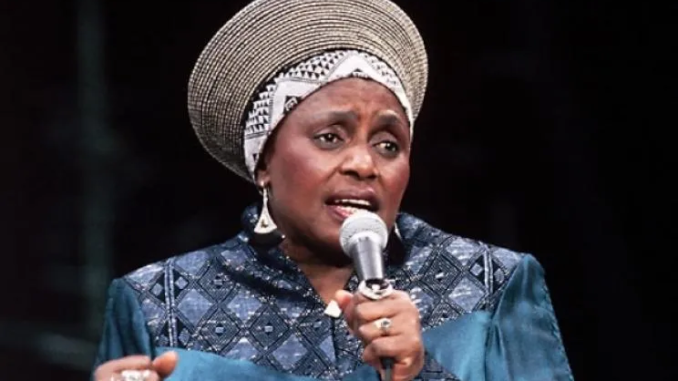
Long before the world had a framework for what we now call “world music,” Miriam Makeba was already doing it — blending South African rhythms, traditional Xhosa singing techniques, and an unmistakably personal emotional intelligence into a sound that moved audiences in languages they did not speak. She was not just a singer. She was a political exile, a United Nations ambassador, a civil rights advocate, and ultimately, one of the most significant human beings the African continent has produced in the modern era.
Miriam Makeba Biography
| Full Name | Zenzile Miriam Makeba |
|---|---|
| Date of Birth | March 4, 1932 |
| Place of Birth | Johannesburg, South Africa (Prospect Township) |
| Nationality | South African (also held Guinean citizenship during exile) |
| Ethnicity | Xhosa (with Swati heritage) |
| Occupation | Singer, Songwriter, Civil Rights Activist, UN Goodwill Ambassador |
| Known For | Pata Pata, The Click Song (Qongqothwane), Malaika |
Early Life and Background
Miriam Makeba was born on March 4, 1932, in Prospect Township near Johannesburg. Her Swati father died when she was just six years old, and she was raised by her Xhosa mother. From her earliest years, music was both a comfort and a calling — she began singing in a school choir and her voice attracted immediate attention. She was educated at the Kilnerton Training Institution in Pretoria, where her talent continued to develop.
As a young woman living under apartheid, Makeba experienced firsthand the daily brutalities of a system designed to dehumanise. But she also experienced the richness of township culture, the communal warmth of people who refused to let their humanity be extinguished by political violence. That duality — pain and joy, injustice and resilience — would define her artistry for the rest of her life.
Career Journey
Miriam Makeba began her professional career in the late 1940s and early 1950s, performing with local South African bands and groups including the Manhattan Brothers and her own group, the Skylarks. Her 1959 appearance in the documentary film Come Back, Africa brought her to international attention and opened doors that apartheid South Africa would have kept firmly closed.
She moved to the United States in 1959 with the support of Harry Belafonte, who helped launch her American career. Her self-titled debut album in 1960 introduced Western audiences to South African music in a way it had never been presented before. Songs like “The Click Song” (a Xhosa wedding song that showcases the language’s distinctive click consonants) became calling cards that showed audiences that African music was sophisticated, complex, and beautiful.
“Pata Pata,” released in 1967, became her biggest international hit — an irresistibly joyful song that climbed charts in multiple countries and introduced a generation of American and European listeners to South African sound. It remains one of the most recognised African songs in history.
Throughout the 1960s, she used her platform to speak openly against apartheid, a stance that resulted in the South African government revoking her citizenship and passport in 1960. She would not be permitted to return to South Africa for over three decades. During her exile, she lived in Guinea — where she was hosted by President Sékou Touré, who gave her citizenship — and continued to perform and advocate internationally.
She testified before the United Nations in 1963, calling for international sanctions against South Africa, and was appointed a UN Goodwill Ambassador. She performed at concerts in support of African liberation movements and collaborated with civil rights leaders across the world. In 1966, she married Stokely Carmichael, the Black Power activist, a decision that created controversy in the United States and led to a significant decrease in her American bookings. She chose her principles over her commercial interests without visible hesitation.
Following Nelson Mandela’s release from prison, Makeba returned to South Africa in 1990. She continued recording and performing well into her seventies, with her final concert taking place in Italy on November 9, 2008 — the night she passed away following a heart attack after her performance.
Personal Life
Miriam Makeba was married five times, with her marriages often intersecting with significant political and cultural moments of their era. She had a daughter, Bongi Makeba, who became a singer herself and tragically predeceased her in 1985. Despite repeated personal losses — including the loss of her citizenship, her daughter, and several failed marriages — Makeba maintained a remarkable equanimity in public, channelling her grief into her art.
Legacy
Miriam Makeba is remembered not just as a musician but as one of the great human rights advocates of the twentieth century. She received the Dag Hammarskjöld Peace Prize in 1986, the Otto Hahn Peace Medal, and the Grammy Lifetime Achievement Award in 2001, among many other honours. South Africa’s post-apartheid government returned her honorary citizenship, and she was celebrated as a national hero.
Conclusion
Miriam Makeba’s life was a testament to the idea that an artist’s power is not limited to the stage. She used her voice — literally and figuratively — to resist oppression, celebrate Africa, and insist on the dignity of all people. She was, and remains, Mama Africa.
Frequently Asked Questions
What was Miriam Makeba’s nickname?
She was widely known as “Mama Africa.”
What is Miriam Makeba’s most famous song?
“Pata Pata” (1967) is her most internationally recognised song, though “The Click Song” is equally iconic.
Why was Miriam Makeba exiled?
The South African apartheid government revoked her citizenship in 1960 after she began speaking publicly against the regime.
Did Miriam Makeba return to South Africa?
Yes, she returned in 1990 following Nelson Mandela’s release from prison.
What was Miriam Makeba’s ethnicity?
She was of Xhosa and Swati heritage.
Disclaimer: The information presented in this biography is compiled from sources accessible to the public. This material is intended for informational purposes only and does not constitute professional advice. While efforts are made to ensure accuracy, the content may not reflect the most current developments.
Leave a Reply