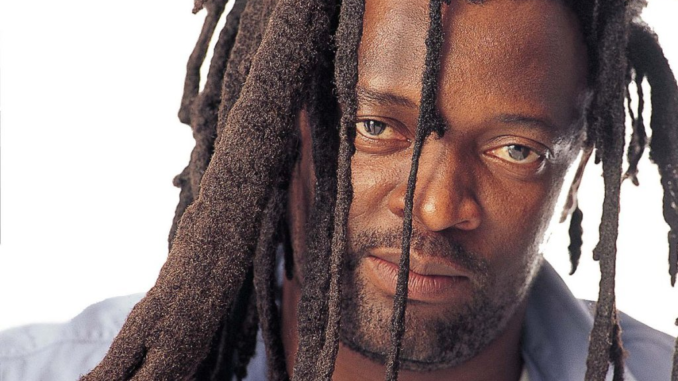
When conversations turn to the greatest reggae artists Africa has ever produced, the name that inevitably rises to the top is Lucky Dube. Not simply because of the quality of his music — though it was exceptional — but because of the moral weight he brought to it. He used reggae as a vehicle for social truth-telling in a country where truth was, for much of his career, a politically dangerous thing to speak. Lucky Dube was Africa’s Bob Marley in the most meaningful sense of that comparison: a prophetic voice who used music to hold a mirror up to society.
Lucky Dube Biography
| Full Name | Lucky Philip Dube |
|---|---|
| Date of Birth | August 3, 1964 |
| Place of Birth | Ermelo, Mpumalanga, South Africa |
| Nationality | South African |
| Ethnicity | Swati / Zulu heritage |
| Occupation | Reggae Singer, Songwriter, Multi-instrumentalist |
| Known For | Prisoner, Slave, Different Colours One People, Trinity albums |
Early Life and Background
Lucky Philip Dube was born on August 3, 1964, in Ermelo, a town in what is now Mpumalanga province. He was raised by his grandmother after being separated from his mother at a young age, a childhood experience that instilled in him both resilience and a profound empathy for those who struggle without family anchors. He grew up in the shadow of apartheid, and the daily realities of that system — the humiliation, the separation, the injustice — became the raw material of his songwriting.
He was introduced to music through the church and through the mbaqanga South African popular music that surrounded him. It was only in his late teens, after being exposed to Jamaican reggae, that he found the sound that felt like home. The rhythmic steadiness of reggae, its spiritual undertones, and its tradition of resistance matched perfectly with what he had to say.
Career Journey
Lucky Dube began his recording career in the early 1980s, initially making mbaqanga music before making the full transition to reggae. His early albums in Zulu attracted a following, but it was his 1989 album Prisoner that broke him internationally. The album’s title track, an unflinching reflection on confinement — both literal and metaphorical — resonated across Africa, the Caribbean, and beyond.
Albums like Slave (1987), Think About the Children (1990), House of Exile (1990), and Victims (1993) built a career defined by social consciousness and musical consistency. His 1994 album Trinity became one of the best-selling reggae albums ever produced on the African continent. By the mid-1990s, Lucky Dube was performing to audiences in Europe, North America, Australia, and across Africa, carrying the South African flag into territory that very few of his peers had reached.
What distinguished him from many of his reggae contemporaries was his versatility as a musician. He played multiple instruments and had a command of multiple languages — English, Zulu, Afrikaans — which gave him access to audiences that other South African artists could not easily reach. He had a particular gift for melodies that felt timeless, songs that were musically accessible without being emotionally shallow.
His album Different Colours/One People (1989) addressed racial reconciliation and unity during one of South Africa’s most volatile political periods, making it both artistically and historically significant.
Personal Life
Lucky Dube was a family man who spoke openly about his love for his children and his faith. He had several children and was known to be deeply private about his domestic life, preferring his public image to be shaped by his music rather than personal revelations. His Christian faith was evident in much of his music, which blended spiritual yearning with social critique in a way that felt authentic rather than performative.
Legacy
Lucky Dube was tragically shot and killed during a carjacking in Johannesburg on October 18, 2007. He was 43 years old. His passing sent shockwaves through South Africa and the global reggae community. Tributes came from heads of state, musicians, and fans across every continent where his music had been heard.
His legacy is secured not just in his recordings but in what he stood for. He demonstrated that African artists could produce world-class reggae without compromising their identity, and that music could be a genuine force for political and social change. Two decades after his passing, his music continues to be discovered by new generations who find in it the same relevance their parents did.
Conclusion
Lucky Dube was more than South Africa’s greatest reggae artist. He was a moral voice, a cultural bridge, and a human being of extraordinary conviction and talent. His story is a reminder of how much one person’s commitment to truth — expressed through music — can ripple outward across time, language, and borders.
Frequently Asked Questions
What genre did Lucky Dube sing?
He is best known as a reggae artist, though he began his career making mbaqanga music.
What was Lucky Dube’s most famous album?
Prisoner (1989) and Trinity (1994) are widely considered his most impactful albums.
Where was Lucky Dube born?
He was born in Ermelo, Mpumalanga, South Africa.
What languages did Lucky Dube sing in?
He performed in English, Zulu, and Afrikaans across his career.
When did Lucky Dube pass away?
He was killed on October 18, 2007, at the age of 43.
Disclaimer: The information presented in this biography is compiled from sources accessible to the public. This material is intended for informational purposes only and does not constitute professional advice. While efforts are made to ensure accuracy, the content may not reflect the most current developments.
Leave a Reply