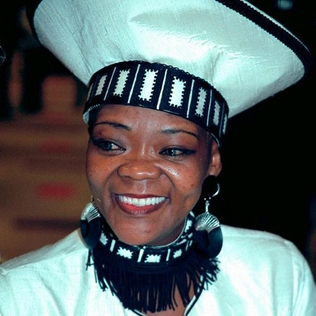
Some artists leave behind catalogues. Others leave behind legends. Brenda Fassie left behind a nation’s worth of memories — and a body of music that still plays in South African taxis, homes, shebeens, and hearts decades after her passing. She was called the “Madonna of the Townships,” though that comparison, while flattering, ultimately sells her short. Brenda Fassie was uniquely, defiantly, magnificently South African — a product of apartheid’s townships who turned personal struggle and communal joy into pop art of the highest order.
Brenda Fassie Biography
| Full Name | Brenda Nokwazi Fassie |
|---|---|
| Date of Birth | November 3, 1964 |
| Place of Birth | Langa, Cape Town, South Africa |
| Nationality | South African |
| Ethnicity | Xhosa |
| Occupation | Singer, Songwriter, Performer |
| Known For | Weekend Special, Too Late for Mama, Vulindlela, Nomakanjani |
Early Life and Background
Brenda Fassie was born on November 3, 1964, in Langa, one of Cape Town’s oldest townships. She was the youngest of nine children born to Elias and Maria Fassie. Music was embedded in the Fassie household — her mother sang in a gospel choir, and young Brenda absorbed music the way other children absorb language. She was performing at local venues by her early teens, singing for pocket change at tourist spots near the Cape Town waterfront with a group of other children.
At 16, she moved to Johannesburg, an act of enormous personal courage for a teenager from a township in the 1980s. She joined the group Blondie and the Spiders, which later became Joy, before embarking on a solo career. It was a turbulent, exciting period in her life, and Johannesburg’s townships provided both the suffering and the electricity that would fuel her best work.
Career Journey
Brenda Fassie’s solo breakthrough came in 1983 with “Weekend Special,” a song that became an anthem not just in South Africa but across the continent and even in Europe and the United States. It was a deceptively simple pop song with an irresistible hook, and it made her a star almost overnight. The song’s lyrics, often interpreted as addressing a romantic situation, resonated far beyond its surface, touching on themes of longing, independence, and female desire.
Through the late 1980s and 1990s, she released a string of hits that mapped the emotional landscape of South African township life. Songs like “Too Late for Mama,” “Black President” (widely interpreted as a tribute to Nelson Mandela), and “Vulindlela” became part of the national soundtrack. “Vulindlela,” released in 1997, remains one of the most recognisable South African pop songs ever recorded — a joyful, celebratory track that played at the country’s post-apartheid euphoria and has never really stopped playing since.
She was known as much for her performances as her recordings. On stage, Brenda Fassie was electric — unpredictable, funny, vulnerable, and completely present. She could move an audience from laughter to tears within a single song, and she had an intuitive understanding of what ordinary people needed to hear.
Her personal life was marked by turbulence, public controversies, and struggles with substance use that she never hid from the public. She faced these challenges openly, and in doing so, she became more relatable rather than less. South Africans did not love Brenda despite her flaws; they loved her partly because of them. She was human in the most complete sense.
Personal Life
Brenda Fassie was married to musician Nhlanhla Mbambo in the late 1980s, and together they had a son, Bongani Fassie, who would later pursue his own music career. Her personal relationships were often complicated and public, reflecting the broader pressures of celebrity life in a country undergoing dramatic political transformation. She identified as bisexual — a declaration that was both radical and quietly celebrated among many of her fans.
Legacy
Brenda Fassie passed away on May 9, 2004, following a cardiac arrest. She was 39. South Africa mourned collectively. Her funeral was attended by tens of thousands of people, and tributes poured in from across the continent. In the years since, her status has only grown. She has been the subject of documentary films, academic papers, and theatrical productions. Her music is taught in schools, analysed in universities, and still streamed daily by a generation that was not yet born when she first performed.
Conclusion
Brenda Fassie’s significance cannot be separated from the South African story. She was a product of apartheid who refused to be defined by it, a woman who insisted on joy in the middle of injustice, and a performer who gave everything she had every time she stepped on a stage. Her legacy is not just musical — it is emotional, political, and deeply, enduringly human.
Frequently Asked Questions
What was Brenda Fassie’s most famous song?
Both “Weekend Special” and “Vulindlela” are considered her most iconic tracks, depending on the generation you ask.
Did Brenda Fassie have children?
Yes, she had a son named Bongani Fassie.
What is Brenda Fassie’s ethnicity?
She was of Xhosa heritage, born in the Langa township of Cape Town.
What was Brenda Fassie’s nickname?
She was widely known as “MaBrrr” and “the Madonna of the Townships.”
When did Brenda Fassie pass away?
She passed away on May 9, 2004, at the age of 39.
Disclaimer: The information presented in this biography is compiled from sources accessible to the public. This material is intended for informational purposes only and does not constitute professional advice. While efforts are made to ensure accuracy, the content may not reflect the most current developments.
Leave a Reply