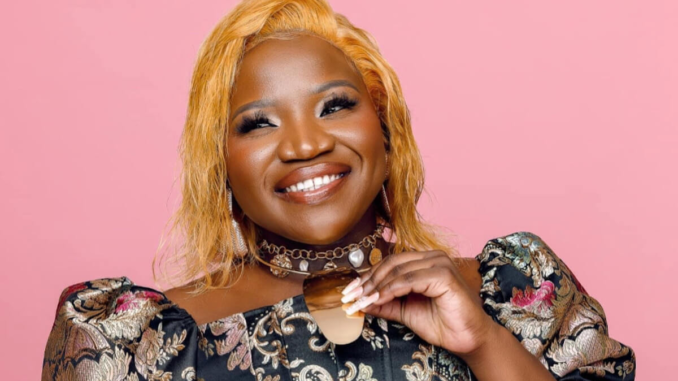
If you have ever watched a South African stage performance and found yourself entirely swept up in a whirlwind of colour, energy, and raw musical power, there is a good chance Makhadzi was on that stage. She is not the kind of artist who eases you into her world — she pulls you in headfirst, and audiences across Africa keep coming back for more. From performing at taxi ranks as a teenager in Limpopo to headlining major continental stages, Makhadzi’s story is a masterclass in self-belief and artistic persistence.
Makhadzi Biography
| Full Name | Ndivhudzannyi Ralivhona |
|---|---|
| Stage Name | Makhadzi |
| Date of Birth | June 30, 1996 |
| Age (as of 2026) | 29 years old |
| Place of Birth | Ha-Mashamba Tshivhangani, Limpopo, South Africa |
| Nationality | South African |
| Ethnicity | Venda (Tshivenda-speaking South African) |
| Occupation | Singer, Songwriter, Dancer, Actress |
| Religion | Christian |
| Height | Approximately 5 feet 6 inches (168 cm) |
| Known For | Matorokisi, Tshanda Vhuya, Ghanama, Number 1 |
Early Life and Background
Makhadzi was born in Ha-Mashamba Tshivhangani, a small village just outside Elim in the Limpopo province of South Africa. She is of Venda heritage, and this cultural identity has remained central to her artistic expression throughout her career. Growing up, she spoke Tshivenda as her first language, and to this day, nearly all of her music is delivered in that tongue — a deliberate and meaningful choice.
Her upbringing was not without difficulty. Her parents separated when she was still young, and she was raised by her mother alongside two siblings. Despite the financial strains that came with a single-parent household in a rural community, there was no shortage of cultural richness. Traditional Venda music, church choirs, and local cultural gatherings surrounded her early years and quietly shaped the performer she would become.
By the age of 12, she had already discovered that she loved to move — she started performing as a dancer at local events, slowly gaining a reputation within her community. At 13, she was performing at taxi ranks, collecting offerings from commuters and passersby who were drawn in by her energy. It was a humble, grassroots beginning, but one that taught her something essential: she had a genuine connection with ordinary people.
Education
Makhadzi completed her secondary education at Mukula Integrated School, where she earned her Grade 12 certificate. She later pursued further studies, obtaining a qualification in Public Relations. She also enrolled in drama studies, a discipline that would complement her theatrical stage presence. While formal education has never been the defining chapter of her story, it is clear she approached personal development seriously even as music began to consume more of her time.
Career Journey
Makhadzi’s formal music career began before she was old enough to vote. In 2009, she independently released an album titled Muvhango, followed by Ndo Tshinya Ni? in 2011 and Litshani u Ntsala Murahu in 2012. These were self-funded projects, produced without the backing of a major label — a testament to her resourcefulness.
A pivotal shift came in 2010 when she joined Makhirikhiri, a musical dance group. Being part of a group gave her structure, exposure, and a deeper understanding of what stage performance demanded. She eventually transitioned from dancing to focusing fully on her music career.
In 2015, she caught the attention of Rita Dee Entertainment and signed a record deal that led to the release of Muhwalo Uya Ndemela. Two years later, her single “Tshanda Vhuya” brought her widespread recognition across South Africa. But her breakthrough on a national scale came in 2019 when “Matorokisi” became a phenomenon — her album of the same name debuted at number two on the South African iTunes charts.
She then signed with Open Mic Productions and released Kokovha in October 2020. The album became the most streamed on Apple Music in South Africa and debuted at number one on the iTunes chart. It produced multiple hit singles including “Amadoda”, “Mphemphe”, and “Tshikwama.” Her collaboration with Master KG on “Tshikwama” exposed her to a global audience that had already fallen in love with his hit “Jerusalema.”
In 2021, she released African Queen, a certified gold album featuring collaborations with Cassper Nyovest, Kabza De Small, and Lady Du. Her single “Ghanama” featuring Prince Benza and King Monada went platinum. In 2023, she left Open Mic Productions and founded her own record label, Makhadzi Entertainment — a decisive move that gave her full creative and commercial control over her music. Her sixth studio album Mbofholowo, released in September 2023, hit one million streams on Apple Music within 48 hours and achieved platinum certification in South Africa.
Her 2024 single “Number 1” featuring Iyanya and Prince Benza debuted at number nine on The Official South African Charts and achieved double platinum status within two months. That same year, she was named Dance Artist of the Year and won the International Achievement of the Year award at the Basadi in Music Awards. In late 2024, she announced her album Miracle Child, adding yet another chapter to an already remarkable discography.
Musical Identity and Cultural Influence
What makes Makhadzi genuinely distinctive in a crowded music landscape is her commitment to Venda culture at a time when global sounds dominate African pop. She sings almost exclusively in Tshivenda, one of the eleven official languages of South Africa, and she has spoken publicly about her belief that doing so gives voice to a community that is often overlooked in mainstream entertainment. This is not simply a marketing strategy — it is a cultural statement, and it resonates deeply with Venda people across the country and diaspora.
Her stage persona is just as powerful as her music. Makhadzi performs with a physical intensity that commands attention — her dancing is athletically demanding, and she has spoken about training rigorously to maintain the stamina required for her shows. She is not just a singer who dances; she is a performer in the fullest sense, and that quality has earned her comparisons to African music legends whose longevity was built on live performance excellence.
Personal Life
Makhadzi was previously in a well-publicised relationship with DJ and music producer Master KG, with whom she collaborated professionally. The relationship attracted significant media attention, but the two eventually parted ways. She later became romantically linked to South African businessman Lawrence Mulaudzi. She does not have publicly confirmed children.
Net Worth
Makhadzi’s financial success is primarily derived from her music releases, touring, brand endorsements, and her independent record label. Figures circulating online vary considerably, and no precise amount has been officially confirmed. What is clear is that she has built a sustainable career on her own terms — releasing her own music, managing her own label, and performing consistently across South Africa and beyond.
Conclusion
Makhadzi is far more than a chart success. She is a cultural ambassador for the Venda people, a self-made artist who built her brand from taxi ranks to platinum certifications, and one of the most energetic live performers on the African continent. Her story challenges the idea that success in African music requires abandoning your roots — in fact, her entire career proves the opposite is true.
Frequently Asked Questions
What is Makhadzi’s real name?
Her real name is Ndivhudzannyi Ralivhona.
Where is Makhadzi from?
She is from Ha-Mashamba Tshivhangani, a village in Limpopo province, South Africa.
What language does Makhadzi sing in?
She sings primarily in Tshivenda, her mother tongue.
What is Makhadzi’s most popular song?
Songs like “Matorokisi,” “Tshanda Vhuya,” “Ghanama,” and “Number 1” are among her biggest hits.
Does Makhadzi have her own record label?
Yes. She founded Makhadzi Entertainment in 2023 after departing from Open Mic Productions.
Disclaimer: The information presented in this biography is compiled from sources accessible to the public. This material is intended for informational purposes only and does not constitute professional advice. While efforts are made to ensure accuracy, the content may not reflect the most current developments.
Leave a Reply